Hair Shears Buying Guide

The electric clipper and shaver have both made it much easier for us to groom ourselves in the comfort of our own homes, but even these great devices have their limitations. There are some things you need to do while styling that an electric razor just isn’t precise enough to do. At the same time, there are places we need to trim our beards and mustaches that an electric razor just can’t reach.

When it comes to trimming your hair with a clipper, a good pair of shears is essential to finish the job – unless you’re shaving everything off, of course. That’s why every person who grooms themselves needs a quality set or two of hairdressing shears or scissors.

In this guide I’m very briefly going to talk about the kinds of things you should look out for when picking out a pair of shears for yourself.

Getting a Handle on Things

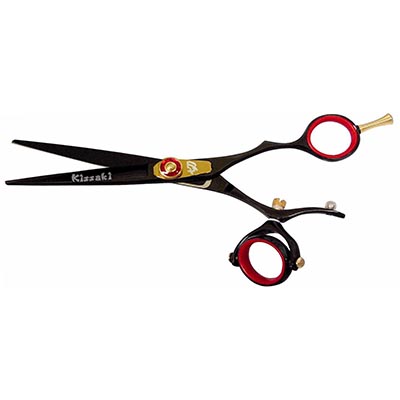
The part of the shears that you’ll spend the most time handling is, of course, the handle. No prizes for guessing that. Shears have handles that can come in a few different styles. There’s no right or wrong style and it is largely down to personal preference. You’ll find that most people like one handle style and tend to stick with it. In general there are three main handle styles: straight, offset, and swivel ring.

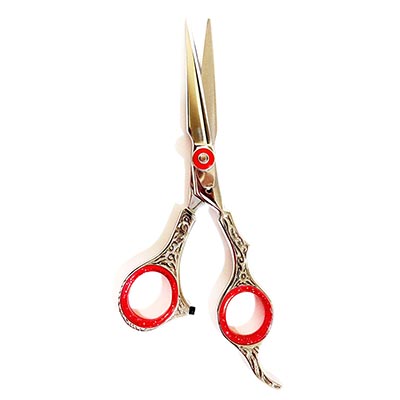
Straight handles aren’t all that common anymore, but many traditionalists still like them. They are the ones most likely to cause hand cramps or other forms of discomfort from prolonged use.

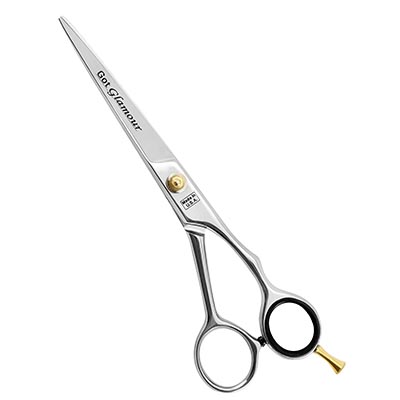
Offset handles are most common and also most popular. These have the rings your thumb and finger go through offset, with the thumb ring lower than the other. This provides a good, comfortable hand position at rest.

The swivel ring type is not one you’ll often see. Here the thumb ring has a swivel built into it that allows you to have the same comfort and control no matter what cutting position or angle you have to take.

It’s also important to try and find out what the ring sizes are. Some imported shears are meant for parts of the world where people have smaller average finger thickness, which means you may be unable to use them comfortably.
Material Facts

While almost all shears are made from steel, steel itself can come in many varieties and qualities. Japanese steel is still considered to be some of the best, but be sure to confirm that the shears are actually made from Japanese steel, if that’s important to you at all. Such shears will have a “Japanese steel” marking or stamp on them, rather than just “stainless steel”. If they were actually made in Japan it should say, well, “made in Japan”.

In truth, however, it doesn’t really matter where the shears were made, just that a high-quality material and good machining process was used to make them. If the shears are very cheap compared to others, that’s probably not the case.

Stainless steel is the most basic and least expensive composite, but still a good all-round material. You may however come across some more exotic composites that contain material such as cobalt. We can’t cover every composite here, but pay attention to the claimed advantages of the composite in question and decide if they should have an impact on your purchasing decision.

Shaping Up

A blade is a blade, right? Well, it turns out it’s more complicated than that. Less expensive shears may have a simple blade with nothing more than a beveled edge. Beveled scissors have the distinct disadvantage of not being amenable to sharpening. This is because the beveled blades are often serrated, which means sharpening them would also ruin them.

The Japanese-style blades are considered to be the standard when it comes to a “professional” shear. These can be sword-style blades or concave blades, as the two most popular versions. These can be sharpened to a razor’s edge.

These two Japanese-style blades are basically only useful for hair, so don’t try them on paper, they’ll only frustrate you.

Size Matters

The length and width of the shears can make a significant difference in how they handle. A thick blade can be used for heavier cutting, and detailed work may benefit from a thinner blade.

Shears that are shorter than five and half inches are better suited to detail-oriented cutting. Longer blades are less precise, but obviously provide more leverage and therefore can cut heavier or thicker hair more easily.

A good length to aim for is from five to six inches, although in the right hands any scissors will do. It’s just the difficulty and effort that varies.

Branding

Unless you are a professional hairdresser with snobby tastes, I wouldn’t really bother paying too much attention to the brand of the shears. The other factors I mention here are more important than the name stamped in the product.

In any event, the known professional brands make shears that are far too expensive to recommend for personal use, but I’ll get to that next.

Price

How much should you spend on a set of shears? Well, that depends on how much you feel comfortable with. The price of a set of shears can be anything from a few dollars to a few hundred. It’s unlikely that the average person who wants to groom themselves or their family will need one of the hundred-dollar-and-up shears, but I certainly won’t tell you how to spend your own money.

My recommendation, however, is that something under or around thirty dollars is probably OK for most people. Remember that a professional set of shears is meant to stand up to repeated sharpening and cutting hundreds of heads a month for years and years. Spending money for a level of endurance you will never subject the product to is not very sensible, if you ask me.

Running with Scissors

While I think that having a set of good hair shears is essential to complete your personal grooming kit, I don’t think it has to be a major purchase at all. Instead it should be a comfortable one.

Have a look at my mini-reviews of some of the most popular shears you can buy online right now. If nothing there seems right for you, you can refer back to this guide to go on the hunt by yourself.

Hair shears are a timeless grooming tool that still earn a place in any modern routine, even with the rise of electric shavers and clippers. They offer a level of control that powered devices often cannot match, making them ideal for finishing touches and detail work. Many men keep shears on hand for quick cleanups between full grooming sessions, appreciating how a simple pair of scissors can reshape a look in moments.

Unlike clippers designed to remove bulk quickly, shears are built for precision. Their longer blades allow for smooth, sweeping cuts that blend lengths and soften lines, which is especially useful around the ears, neckline, and temples. A skilled hand with a good pair of shears can refine a haircut that a clipper leaves looking blocky or uneven, turning a basic trim into a polished style.

Choosing the right pair of shears starts with understanding blade design. Straight blades are the classic choice for general cutting, while offset handles help reduce wrist strain during longer sessions. Material and craftsmanship matter as well, since sharper edges and balanced weight translate to cleaner cuts and greater comfort. Even men who do most of their grooming at home benefit from learning the basics of how quality shears feel in the hand.

Maintenance is straightforward but important, and it echoes the care given to other grooming tools. Keeping blades clean, drying them after use, and occasional oiling helps preserve sharpness and prevent rust. Storing shears in a protective pouch or case also guards against drops and nicks. With a little attention, a solid pair can remain a reliable part of a grooming kit for years, much like a dependable razor or trimmer.

Hair shears also complement other tools rather than replace them. Many grooming routines pair clippers for overall length with shears for detail, and barbers often take the same approach at home. Learning basic scissor techniques, such as point cutting or slide cutting, can add versatility to a personal grooming practice. For men who enjoy shaping their own style, shears offer a satisfying blend of tradition and creative control.