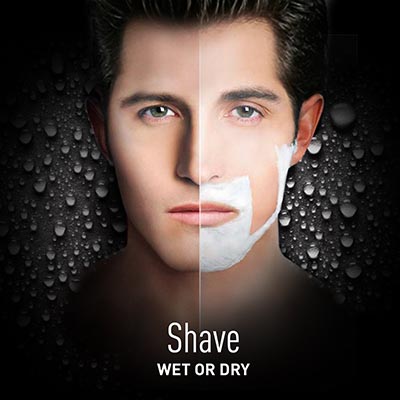
The answer is of course, yes. A good shaving cream will actually soften your facial hair. This makes the hair easier to cut, which is easier on both the blades and your skin. It also makes it less likely that hair will be pulled out compared to a dry shave.
There are also a bunch of extras that vary from product to product which protect the skin or simply smell nice. These are not universal features of shaving creams, though, so we will address them individually.
Am I Your Type?
There are actually a few different types of products that do the job of shaving cream; these substances fall under a broader category of “shaving lubricants”. Technically, this should then be a shaving lubricant buyer’s guide, but if I did that you might have had no idea what I was talking about.
In any event, you get shaving creams, oils, soaps, and gels – each with its own pros and cons.
Gelling Well
Shaving gels and foams usually come in some sort of pressurized spray can. Many of them will start to foam the second they come into contact with the air. These products are convenient, but they are at the lower end of the quality spectrum. They also contain ingredients that are specific to their delivery method. This includes all sorts of propellants and other sorts of aerosol stuff that can be rough on sensitive skin or otherwise unpleasant. These also tend to smell a bit stronger than other lubricants because they have to hide the smell of those chemicals. Gels are not the greatest choice, but where budget and convenience are high priorities they still have a place. It still beats shaving dry.
Snake Oil
You may not be aware of shaving oil, since this is not such a mainstream product, but a shaving oil can be a way to enhance your shaving experience greatly. It’s not supposed to be used on its own, but in combination with another lubricant like a cream. Oils can be a bit more expensive to buy, but since you use so little of it that you are unlikely to run out any time soon. Really, there’s nothing like the glide of a good oil when using a razor. For electric razors the benefit isn’t all that clear. Personally I think an oil is overkill when you are shaving with a wet electric shaver and may even be bad for that particular model, although you’ll have to consult the manual to be sure.
Rope-a-Dope Soap
Shaving soap is one of the more traditional lubricants, but don’t let that fool you. Combined with a good shaving brush you’ll have a hard time beating the lather of a proper shaving soap.
The main downside to shaving soaps is that they aren’t as convenient as creams or gels. You see, the soap is dry and needs to be mixed with water, which means you can easily get the dilution wrong. That means the wrong level of lubrication. If you go the soap route there’s a bit of trial and error involved, but you’ll soon get the hang of it. The brush itself also acts as an exfoliator, which is a nice little bonus.
So why not just use a regular old bar of soap? Well, the simple answer is that they are too dry. They don’t lubricate your skin enough and you can easily end up with razor burn. Believe me, soap made for shaving is the way to go. That’s a lesson I had to learn the hard way.
The Cream Floats to the Top
Creams are probably as well known as gels at this point, but other than that there really is no comparison.
Creams give you the shaving quality of a soap with the convenience of a gel. You can also use a brush or just apply by hand. The lather from this lubricant is far better than either foams or gels. If you never try, you’ll never know, but take my word for it.
Measure Twice, Cut Once
When you are looking for the perfect lubricant to help get that irritation-free and smooth shave, be sure to look at the ingredients list carefully. If you have sensitive skin in particular, you should be on the lookout for something that says it is free from common allergens and irritants.
In fact, your skin type is a pretty important consideration, as I also explain in my aftershave buyer’s guide. So if you have oily or dry skin you’ll want to get something that helps you deal with the issue.
If you don’t plan on using an aftershave, the smell of the lubricant may also be important to you. But in general the aftershave will mask any residual smell, so for most people this will be a non-issue.
Ultimately you’ll have to experiment a bit with different lubricants until you find one that works with both your skin and your razor. With that in mind, try not to buy large volumes right away. If they sell a travel size of the lubricant you want, perhaps get that first.
Smooth McGroove
Either way, I think that if you go down the route of a wet, lubricated shave you’ll never turn back to the dry side. The advent of wet and dry electric shavers really proves that you can mix electricity and water with great results. Just don’t literally try to do that. Seriously, I mean it figuratively.